What if your first Tampa home could help pay its own mortgage? With the right small multifamily or a home that includes a legal accessory dwelling unit, you can offset housing costs and build equity faster. If you are eyeing Tampa or greater Hillsborough County, you will want a clear picture of local rules, realistic rents, and financing options. This guide gives you the basics, a simple deal framework, and the key checkpoints to help you move with confidence. Let’s dive in.
What house hacking means in Tampa
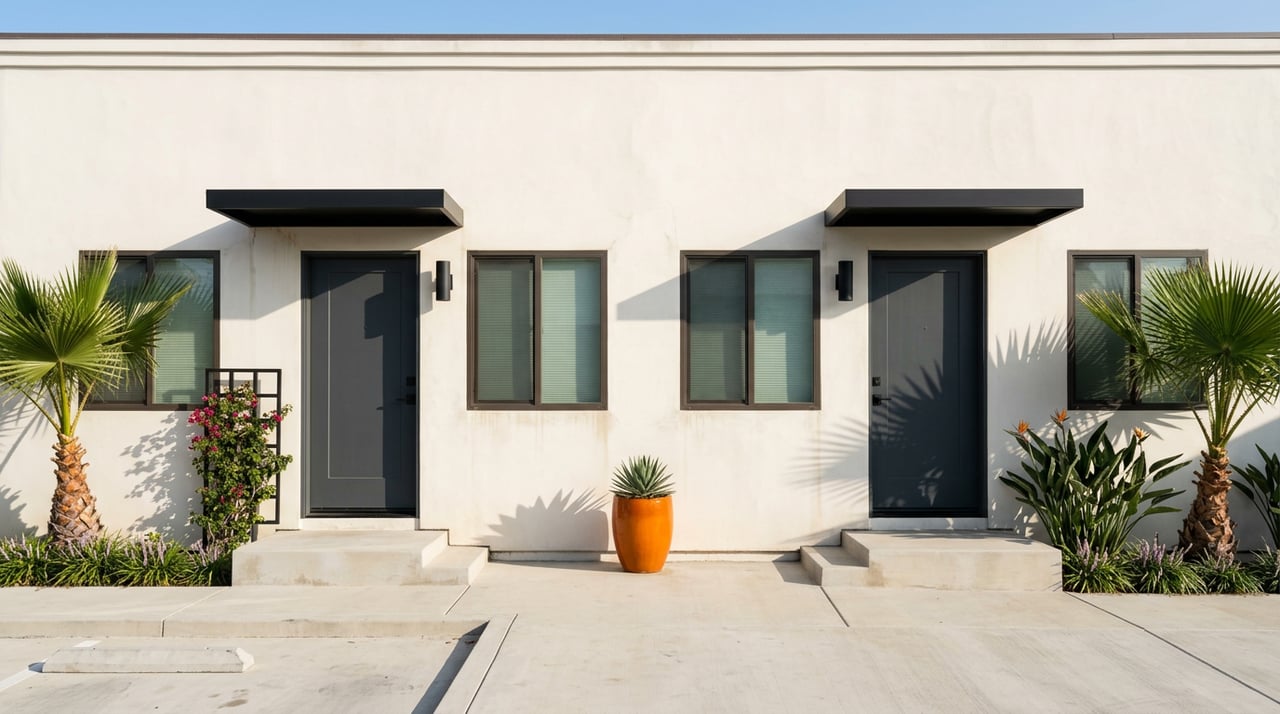
House hacking means you buy an owner-occupied property that has independent rental units. You live in one unit and rent the others. In Tampa, the most common setups are duplexes, triplexes, fourplexes, and single-family homes with an accessory dwelling unit. Fannie Mae recognizes 2 to 4 unit properties as part of the “missing middle” that often suits owner-occupant investors, which is why many loan programs support this path for buyers who will live on-site. You can review that perspective in Fannie Mae’s missing middle overview.
Tampa market snapshot: prices and rents
Your numbers start with realistic price and rent inputs. As a baseline, the typical home value in the City of Tampa is about $366,000, according to Zillow’s ZHVI. Rents remain above pre-pandemic levels. Zillow’s observed rent index shows an average around $1,970 citywide, with some central ZIP codes trending above $2,200. See the local trend line in Zillow’s Tampa rent data.
To stay conservative, it helps to cross-check rents with HUD’s small-area Fair Market Rents. For the Tampa–St. Petersburg–Clearwater metro, recent 2-bedroom FMRs sit in the low $1,900s on average, with wide ZIP-level variation. You can review the ZIP table in HUD’s FY2026 FMR documentation.
ADUs and zoning: where they fit
City of Tampa: Special Use ADUs
The City of Tampa treats accessory dwelling units as a secondary, independent dwelling with its own kitchen, bath, and sleeping area. ADUs are only allowed in certain zoning districts and mapped areas, and they typically require a Special Use permit. Size maximums and occupancy rules can change by neighborhood, and in some cases the owner must live in the primary residence. There is also a minimum stay of one week for dwellings that fall under the City’s ADU definition. Always start with the city’s guidance and ADU map, and coordinate with Development staff early. See the City of Tampa ADU FAQ for details and contacts.
Unincorporated Hillsborough County rules
Outside the city, ADUs and accessory structures are governed by the county’s Land Development Code. Setbacks, height limits, and design standards vary by zoning district. Before you pencil in an ADU or a multi-unit conversion, verify your parcel’s zoning and code allowances. The county’s ADU and accessory rules are published in the Hillsborough County Land Development Code.
Permits, inspections, and utilities
Whether you add an ADU or convert space, you should plan on permits, plan review, and inspections. If you want separate utility metering, coordinate with the utility and your jurisdiction on what is feasible for your structure. Fees and timelines depend on the scope. Development Services can confirm if your design is treated as an accessory structure or a separate dwelling under code standards. You can start with the county’s Land Development Code to understand the baseline.
Short-term rental reality for ADUs
Florida law limits how cities can change short-term rental rules, and Tampa’s ADU guidance sets a minimum one-week occupancy period for dwellings that meet the ADU definition. In many cases, short-term rentals in Florida also require a state DBPR license and local registration where applicable. While every jurisdiction is different, local examples show the dual requirement of state licensing plus local registration. You can see how a county administers local registration by reviewing Collier County’s short-term rental page. Always confirm the current rules for your exact Tampa or Hillsborough address before you plan on nightly stays.
Financing small multifamily
FHA for 1 to 4 units
FHA financing supports owner-occupied 1 to 4 unit properties. Lenders can often count a portion of projected rents from the other units toward your qualifying income. For 3 and 4 unit purchases, some cases trigger a self-sufficiency test and reserve requirements. Product rules and lender overlays change, so lock in a preapproval that models rental income for your target address. For a quick overview, see this FHA multi-unit summary.
Conventional updates for 2 to 4 units
Fannie Mae updates have recently improved access to owner-occupied 2 to 4 unit purchases for many buyers. In practical terms, you may qualify with lower down payments than before, subject to loan limits and Desktop Underwriter findings. Lenders still verify reserves and how much projected rent can be used for qualifying. Review Fannie Mae’s perspective on small multifamily in its missing middle housing brief and ask your lender how current DU rules apply to your price point.
VA and portfolio options
If you are VA-eligible, ask a VA-approved lender about purchasing 2 to 4 units while occupying one. Some community banks and portfolio lenders also serve this segment, and there are investor-focused products if you do not plan to live on-site. Terms, down payments, and underwriting can differ, so compare options side by side.
Taxes and insurance you need to model
Homestead and Save Our Homes
Florida’s homestead exemption can reduce taxable assessed value for your primary residence and activate the Save Our Homes cap on future assessment increases. If a property appraiser determines your ADU or a portion of the home is used as a rental, that part can be classified as non-homestead, which means it would not receive the Save Our Homes cap. This can raise your annual tax bill compared to a full homestead property. Review the state’s homestead application DR-501 and confirm eligibility and treatment with the Hillsborough County Property Appraiser before you close.
Insurance for rentals and ADUs
Once tenants are involved, you usually need landlord coverage or a dwelling policy rider beyond a standard homeowner policy. If you add an ADU, your carrier may treat it as a separate exposure with its own limits. Get quotes early and compare coverage types as part of your pro forma.
Run the numbers: a simple framework
You do not need a complicated model to see if a property works as a house hack. Use this simple outline to estimate performance.
- Gross scheduled rent: Add up target rents for all units you plan to lease.
- Vacancy allowance: Multiply gross rent by 5 to 10 percent.
- Effective gross income: Subtract vacancy from gross rent.
- Operating expenses: Include property taxes, insurance, utilities you pay, repairs and maintenance, reserves, and property management if you will not self-manage.
- Net operating income: Effective gross income minus operating expenses.
- Debt service: Estimated monthly principal and interest for your loan product plus taxes and insurance.
- Cash flow: Net operating income minus debt service.
For conservative rents, cross-check HUD small-area FMRs for your ZIP and compare with recent listings and Zillow’s rent trend data. Then run your lender preapproval with rental income included so you know the exact reserves, income credits, and any self-sufficiency tests before you write an offer.
Due diligence checklist for Tampa and Hillsborough
Use this quick list before you go under contract:
- Zoning and ADU eligibility. If in the City, verify whether an ADU is allowed by area and if a Special Use permit is required. Start with the Tampa ADU FAQ. For unincorporated parcels, review the County Land Development Code.
- HOA covenants. Confirm any limits on leasing, ADUs, or short-term stays.
- Permitting history. Verify that any conversions were permitted and check for open code cases.
- Utilities. Confirm whether units have separate meters or if a split is feasible and what it may cost.
- Leases and occupancy. If tenant-occupied, review current leases and confirm legal occupancy and landlord-tenant rules under Florida Statutes Chapter 83.
- Property taxes. Ask how a rental unit or ADU could affect homestead status and assessments.
- Insurance. Get landlord policy quotes, including any ADU riders and liability coverage.
- Financing. Secure preapproval that models rental income, reserves, and any self-sufficiency test.
Common deal-killers to watch for
- HOA restrictions that prohibit multiple units or limit rentals.
- Parcel not eligible for an ADU, or a Special Use permit is unlikely.
- FHA self-sufficiency test failure on 3 or 4 unit properties, which can block FHA financing if projected rents do not meet the test. See the FHA overview.
- Loss of homestead benefits on the rented portion of a property with an ADU, which can increase taxes compared with a full homestead.
Where small multifamily is most common
Small multifamily stock in the Tampa area is not evenly distributed. Older urban neighborhoods near the core, such as areas around Seminole Heights and East Tampa, tend to have more duplexes and older conversions. Many suburban areas have fewer legal small multifamily buildings. Local planning work has highlighted the need for more missing middle options, including ADUs and 2 to 4 unit housing forms. For broader context on local housing policy focus, see Plan Hillsborough’s annual report.
Ready to house hack in Tampa?
If you want a clear, step-by-step path, you need three things: a search focused on the right property types, a lender who will model rental income, and accurate rent and expense inputs. Our small-team approach makes that process simple. We can help you source the right duplex or ADU-ready property, coordinate with local staff on feasibility, model rents using conservative ZIP-level benchmarks, place tenants, and manage day-to-day operations if you prefer a hands-off experience. Connect with Pointer Property Group to map your plan.
FAQs
Can you live in one unit and rent others in Tampa?
- In most duplex, triplex, and fourplex setups you can, and many loan programs are designed for owner-occupants, but final permissibility depends on zoning, any HOA rules, and your loan program. See the 2 to 4 unit context in Fannie Mae’s brief.
Do Tampa ADUs need a Special Use permit?
- Yes in many cases. The City of Tampa allows ADUs only in certain zoning districts and areas, often by Special Use approval with size, occupancy, and owner-occupancy criteria. Review the Tampa ADU FAQ.
Are nightly Airbnb stays allowed for ADUs in Tampa?
- Not by default. Tampa’s guidance references a one-week minimum stay for dwellings under the ADU definition, and many Florida short-term rentals also require DBPR licensing and local registration where applicable. Confirm rules for your address and review a local example like Collier County’s registration process.
Will renting an ADU affect my homestead exemption?
- It can. If the property appraiser classifies the ADU as a rental portion, that part may be treated as non-homestead without Save Our Homes protections. Review Florida’s homestead application DR-501 and confirm treatment with the county.
What financing works best for a Tampa duplex purchase?
- Common paths include FHA for 1 to 4 units with owner occupancy, conventional loans that have improved access for 2 to 4 units, VA if eligible, and portfolio products. Ask your lender to preapprove you with rental income modeled and to explain any self-sufficiency tests; see this FHA summary.