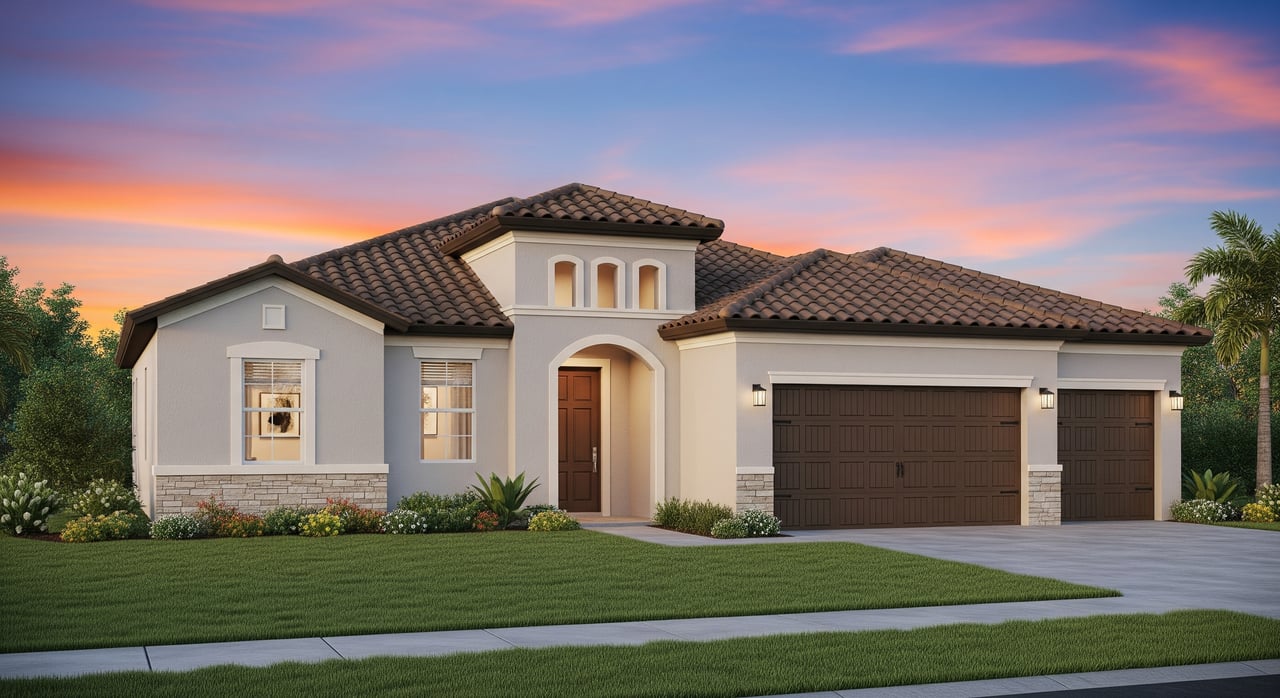
Running the numbers on a Bradenton rental? Start with cap rate. If you are buying a single-family home to rent or turning your Bradenton property into a long-term or seasonal rental, you need a quick, apples-to-apples way to compare income potential and risk. This guide explains cap rates in plain English, shows you how to calculate them, and highlights the local Manatee County factors that can move your returns. You will also get a simple checklist to underwrite a property with confidence. Let’s dive in.
Cap rate basics
Cap rate is a quick snapshot of a property’s operating income relative to its price. The formula is simple: Cap rate = Net Operating Income (NOI) ÷ Purchase price.
NOI is the rent and other income a property generates after normal operating expenses. It includes items like property taxes, insurance, utilities you pay as the owner, repairs and maintenance, property management, HOA fees, and reserves for capital expenditures. It excludes mortgage costs. That makes cap rate a property-level, unlevered metric you can use to compare different homes or neighborhoods.
Cap rate helps you:
- Compare income potential across properties and markets.
- See how price and operating costs impact yield.
- Gauge relative risk and demand for a given area.
Cap rate is not cash flow to you as an investor because it ignores financing and taxes. It is not a substitute for full underwriting.
Useful companion metrics
- Gross Rent Multiplier (GRM) = Purchase price ÷ Gross annual rent. This is a fast first screen.
- Cash-on-cash return = Annual pre-tax cash flow ÷ your cash invested. This includes financing.
- Internal Rate of Return (IRR) looks at multi-year performance and sale proceeds.
- Debt service coverage ratio (DSCR) is used by lenders to size loans.
How to calculate cap rate
Follow these steps for a Bradenton single-family rental:
- Estimate realistic market rent using local comps for similar homes.
- Annualize it to get Gross Potential Rent.
- Subtract vacancy and concessions to get Effective Gross Income.
- Add other income like pet fees.
- Estimate annual operating expenses: property taxes, homeowners and wind insurance, flood insurance if required, HOA, owner-paid utilities, repairs and maintenance, property management, marketing, legal or accounting, and reserves for replacements.
- Compute NOI: Effective Gross Income plus other income minus operating expenses.
- Divide NOI by the purchase price or current market value.
Bradenton example (illustrative only)
- Market gross rent: $2,000 per month → $24,000 per year
- Vacancy allowance at 6 percent → −$1,440 → Effective Gross Income = $22,560
- Other income (pet fees, etc.) = $240 → Total income = $22,800
- Operating expenses: property tax $4,200; insurance $2,400; maintenance and repairs $2,500; management fee at 8 percent $1,824; utilities and other $1,200; reserves $1,200 → Total ≈ $13,324
- NOI = $22,800 − $13,324 = $9,476
- Purchase price = $300,000 → Cap rate ≈ 3.16 percent
This shows how modest NOI plus higher Florida costs like taxes, insurance, and maintenance can produce a low single-digit cap rate. That is common in many coastal Florida markets when home prices are elevated relative to rents.
Bradenton factors that move cap rates
Bradenton sits within the Sarasota–Bradenton metro, with demand from retirees, seasonal residents, tourism, and in-migration from higher-cost states. Local details matter. Here are the big drivers to evaluate when you estimate NOI and interpret cap rates in Manatee County.
Rents and seasonality
Winter months often bring higher short-term demand and rates. Long-term rentals can see seasonal vacancy patterns. Adjust vacancy assumptions accordingly and separate short-term from long-term underwriting.
Prices and supply
As purchase prices rise, cap rates fall unless income rises too. Inventory levels, new single-family construction, and investor activity can shift pricing. Track neighborhood comps and recent investor sales.
Taxes and assessments
Florida has no state income tax, which is favorable for investors, but property taxes and local millage rates are a major operating cost. Investors generally do not receive homestead exemptions that owner-occupants get. Confirm current millage and estimates through Manatee County resources. Start with the official Manatee County website for links to county offices and property information.
Insurance and flood risk
Coastal Florida markets face elevated homeowners and windstorm insurance costs. Flood zones can require separate flood insurance. Rising insurance premiums directly reduce NOI and lower cap rates at a given price. Review statewide trends via the Florida Office of Insurance Regulation and check flood zones through the FEMA Flood Map Service Center.
Natural hazard exposure
Flooding, storm surge, and hurricane intensity are underwriting and resale considerations. Properties with higher physical risk may carry different pricing and exit liquidity. Validate flood zone, elevation, and potential mitigation steps using FEMA resources.
Landlord rules and licensing
Florida’s landlord-tenant statutes are considered landlord-friendly compared with many states. However, local rules in the City of Bradenton and Manatee County can affect short-term rental operations, licensing, and operating costs. Review the City of Bradenton and Manatee County sites for current ordinances before assuming vacation rental income in your pro forma.
Short-term versus long-term rentals
Some homes can operate as vacation or seasonal rentals with higher gross rent but also higher turnover, furnishing, marketing, and management intensity. Compute separate cap rates for short-term and long-term scenarios. Use realistic vacancy and expense line items for each.
Property age and condition
Older homes may look like higher cap-rate opportunities because pricing reflects needed capital expenditures such as roofs, HVAC, or plumbing. Budget an annual reserve and plan for near-term replacements to avoid overstating NOI.
Financing environment
Cap rate itself does not include financing, but interest rates influence investor demand and pricing. Rising rates can push buyers to demand higher yields or lower prices. Watch local transaction volume and investor appetite, then underwrite your financing separately using cash-on-cash and DSCR.
Interpreting cap rates in context
Across many U.S. single-family rental markets in the mid‑2020s, cap rates commonly fall in the 3 to 8 percent range. In Bradenton, you should expect outcomes toward the lower to mid end when home prices are elevated relative to rents. Neighborhoods with stronger rent-to-price ratios or situations with motivated sellers can produce higher cap rates. Because data changes fast, use current comps and avoid relying on a single number for the whole area.
Risk and target cap rates
- Location and flood exposure. Higher physical risk usually means you should target a higher cap rate to compensate.
- Tenant profile. Short-term rentals can support higher gross yields but have more variable operating results and costs.
- Management intensity. Professional management fees lower net yield. Plan 6 to 12 percent of collected rent for long-term management and more for short-term.
- Liquidity and resale. Areas with slower resale velocity often trade at higher cap rates.
Limits and pitfalls to avoid
- Cap rate ignores financing and tax benefits, so a low cap rate can still work if you secure favorable loan terms or have tax advantages.
- Expense assumptions drive NOI. Do not skip vacancy, reserves, or realistic insurance costs.
- Use true comparables. Match home type, age, flood risk, HOA, lease type, and tenant profile.
A practical Bradenton underwriting checklist
Use this quick checklist before you make an offer or set your list price as a landlord:
- Property details. Address, age, square footage, bed/bath count, construction type, lot size, elevation, and flood zone.
- Rent comps. Gather three to six comparable single-family rentals in the same neighborhood. Separate long-term from short-term.
- Vacancy. Ask local property managers and consult benchmarks from the U.S. Census Bureau’s American Community Survey for broader context.
- Gross potential rent. Note seasonal patterns if applicable.
- Operating expenses. Confirm current property tax bill and applicable exemptions, insurance quotes for homeowners, wind, and flood, HOA fees, owner-paid utilities, management fees, marketing, legal or accounting, and routine maintenance.
- Maintenance and reserves. As a rule of thumb, plan around 1 percent of property value per year or $1,200 to $3,000 depending on age and condition, plus specific reserves for roof, HVAC, and structural items.
- Management. Price out professional property management for long-term rentals and higher service levels for short-term.
- Legal and licensing. Review the City of Bradenton and Manatee County for current rules, permitting, and licensing.
- Flood and mitigation. Check FEMA flood maps, elevation, and typical mitigation costs through the FEMA Flood Map Service Center.
- Comparable sales and investor comps. Study recent investor transactions to see actual pricing and cap rate outcomes.
- Financing scenarios. Build cash-on-cash and DSCR models under realistic loan terms and reserves.
Quick “what to ask” list when reviewing a specific property:
- Ask the seller for 12 months of actual expenses and rent history.
- Pull three recent comparable rent listings and three investor sales nearby.
- Get a current insurance quote, including wind and flood if required.
- Obtain a current property tax estimate for a non-homesteaded owner.
When a low cap rate can still make sense
Cap rate is just one lens. A lower cap rate may still pencil if you have favorable financing, a plan to increase NOI through better management or modest improvements, or tax strategies that change after-tax returns. Compare properties on cap rate and on cash-on-cash, IRR, and DSCR so you understand short-term cash flow and long-term performance.
How we can help in Bradenton
You do not have to model this alone. Our small, accountable team pairs local Bradenton know-how with full-service execution. We help you source properties, underwrite cap rates with real local inputs, place qualified tenants quickly, and manage day-to-day operations. If a property fits as a vacation or seasonal rental, our team can also handle Airbnb and short-term rental management so you have one partner from acquisition to operations.
Ready to see how a property might perform as a rental in Manatee County? Reach out to Pointer Property Group for honest advice, a clear pro forma, and a management plan that fits your goals.
FAQs
What is a cap rate for a Bradenton single-family rental?
- Cap rate is NOI divided by purchase price. It shows operating income as a percentage of price and helps you compare Bradenton rentals without considering your mortgage.
How do insurance and flood zones affect Bradenton rental returns?
- Higher homeowners, wind, and flood premiums reduce NOI and lower cap rates. Check zones at the FEMA Flood Map Service Center and review statewide trends via the Florida Office of Insurance Regulation.
Are short-term rentals allowed in Bradenton and do they change cap rates?
- Rules vary by city and county, so confirm licensing and limits with the City of Bradenton and Manatee County. Short-term rentals can boost gross rent but bring higher vacancy, costs, and management needs.
How do Manatee County property taxes impact an investor’s cap rate?
- Investors generally do not receive homestead exemptions, so you should estimate property taxes using local millage rates and the expected assessed value for a non-homesteaded owner.
What vacancy rate should I use for a Bradenton long-term rental?
- Many investors underwrite 4 to 10 percent depending on neighborhood and seasonality. Cross-check with local managers and the U.S. Census Bureau’s American Community Survey for context.
What is the difference between cap rate and cash-on-cash return?
- Cap rate ignores financing and taxes, while cash-on-cash return includes your loan terms and shows your annual pre-tax cash flow relative to your cash invested.